Denmark, Sweden and Norway · Life around the quay
Scandinavian harbour culture
Fishing boats, visiting yachts, a ferry landing and a path to the beach can all belong to the same small harbour. A guest berth brings the town or island close, from the morning bakery to the last light on the boathouses.
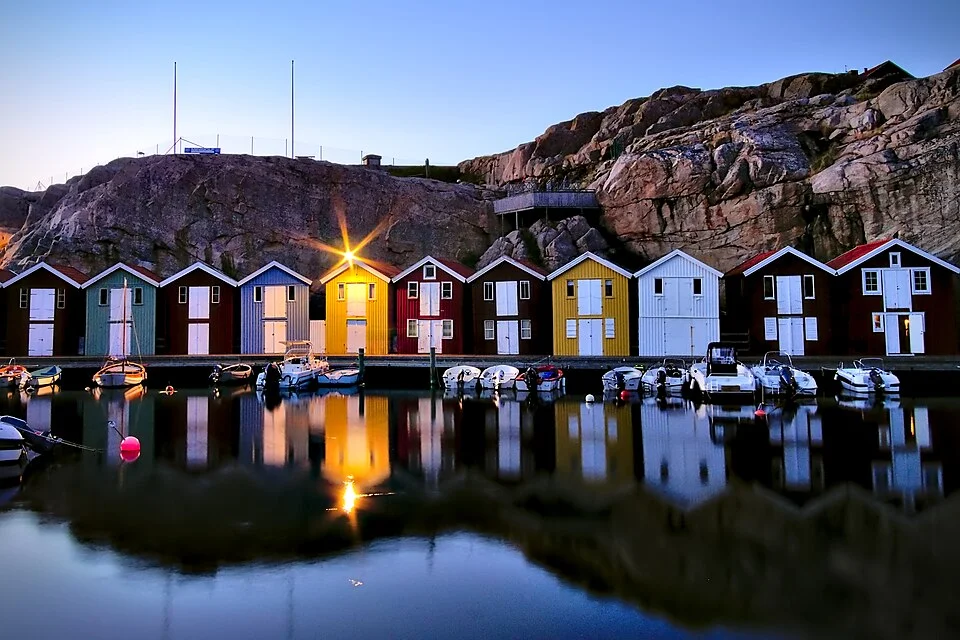
Photo: Thomas Fabian
Working ports and island villages · A shared waterfront
A harbour in the middle of local life
Many Scandinavian guest harbours grew around fishing, trade or a local boating community. Visiting yachts occupy one part of a waterfront that still has other jobs. At Anholt, the ferry links an offshore island with the mainland beside the visiting boats. On Donsö, shipping and fishing remain part of island life, with a fish shop, grocer and restaurants near the harbour.
This makes going ashore unusually immediate. Donsö’s bathing pier is on the western side of the outer pier; at Helsingør, the old town is a short walk from Nordhavn. A swim, shopping for supper and a walk through the streets can all begin at the same gangway. The shore offers different ways to spend an afternoon without everyone needing the same interests or pace.
The signs change language along the coast: gæstehavn in Denmark, gästhamn in Sweden and gjestehavn in Norway all mean guest harbour. The visitor spaces may form a harbour of their own, a few pontoons within a larger port or temporarily vacant local berths.
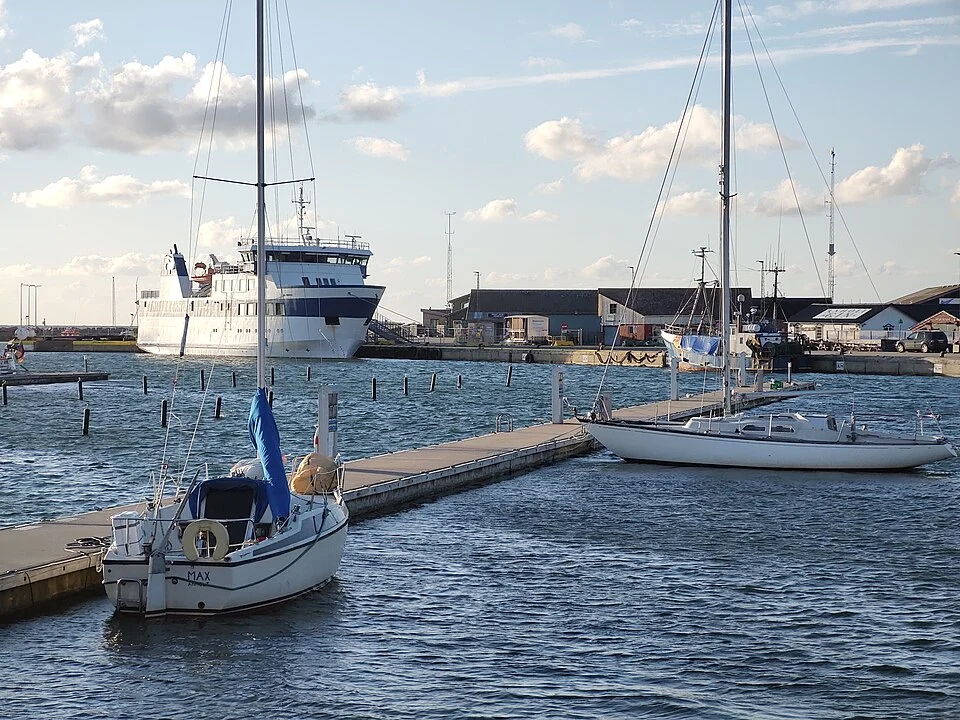
Photo: Fugit hora
Guest berths and green signs · Arrival customs
Find a berth, then register
At many harbours, arrival begins with the guest-berth plan and signs rather than an assigned space or an escort to the pontoon. Registration and payment follow once the boat is moored. The practical distinction is between a place that is visibly empty and one released for visitors.
Self-service arrival can coexist with a staffed harbour. The local arrangement matters more than a general expectation of how a marina should operate.
Reserved and unreserved spaces · Two systems together
The booking screen shows only part of some harbours
Reservations are available at some popular destinations, often alongside a substantial unreserved area.
For those harbours, a full online allocation does not describe the whole waterfront. Equally, an unreserved area is a possibility on arrival, not a promise of space. Marstrand’s booking service does not accept reservations for the day of arrival, so even its bookable spaces work differently from an instant hotel reservation.
Machines, apps and access codes · Paying for a stay
What the harbour fee includes
Payment machines, QR codes and harbour apps are common. They often handle access to showers and electricity as well as the berth itself. Helsingør uses TallyWeb, reached through the QR codes on its service pedestals; Donsö accepts payment at its machine or through the BEAS app. A receipt or confirmation may also contain the service-building code.
Electricity arrangements vary within each country. These examples show the differences more usefully than a Danish, Swedish or Norwegian rule.
Donsö: everyday services included
The visitor fee includes electricity, water, showers and toilets. Laundry has a separate charge. The payment confirmation supplies the access information.
Stavanger: power with the summer berth
Skjærhalden: power activated separately
At Skjærhalden, electricity is an extra purchase through Dockspot. The confirmation provides the code used to activate the pedestal. It is a different arrangement from Stavanger within the same country.
July on the waterfront · Sharing the available space
A busy harbour has a different rhythm
July can bring densely occupied harbours, particularly at the well-known island landfalls. Anholt’s summer harbour is a good example: many visiting boats gather beside a small island community. Its geography concentrates demand. Grenaa lies roughly 27 nautical miles away across open Kattegat, so another mainland harbour is a substantial passage away.
Rafting is an established part of Danish harbour life. The Danish Sailing Union’s harbour customs leave the permissible size of a raft to local conditions and the harbourmaster. A useful social convention is to cross neighbouring boats forward of the mast, keeping their cockpits private. Agreeing departure times with the boats alongside is part of sharing the berth.
The closeness is part of the experience: the route ashore may pass across another foredeck before reaching the quay. A berth at a popular town waterfront gives immediate access to restaurants and evening activity; an island bay offers a different setting, with the shore and water around the boat.
Beyond the guest pontoon · Natural harbours and club buoys
The islands offer another kind of stop
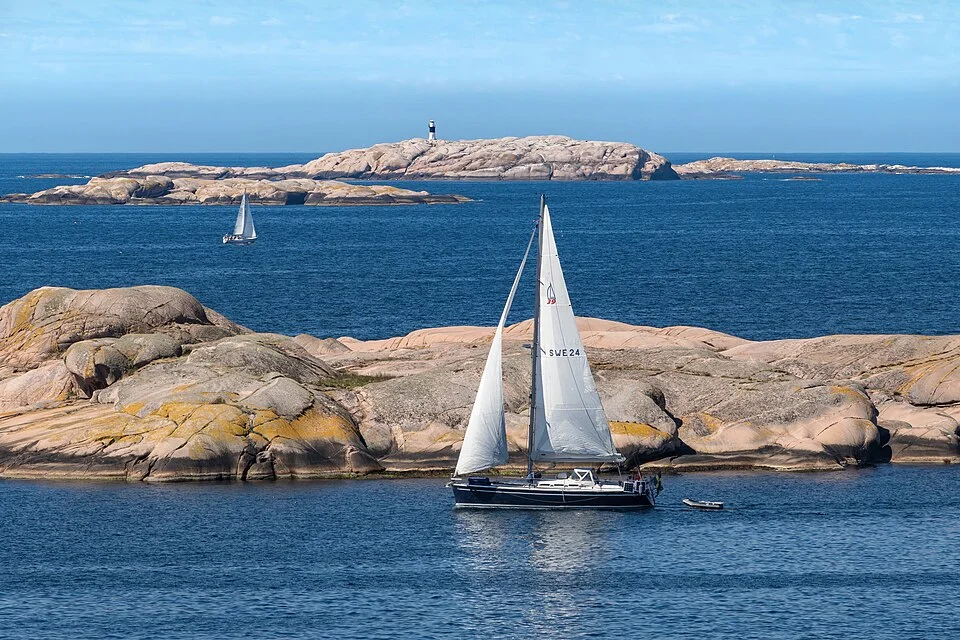
A Swedish naturhamn or Norwegian naturhavn is a natural harbour: shelter formed by the coast itself, rather than a serviced visitor marina. These places belong alongside the village harbours in the cruising life of Bohuslän, Hvaler and the Norwegian islands. Smooth rock, a path through woodland or a small beach can become the whole shore visit.
In Sweden, public access rights on the water allow temporary mooring and going ashore away from the private area around homes. Nature reserves and bird-protection areas can have their own landing and mooring restrictions. This is a Swedish access framework, rather than a shared rule for all three countries.
A buoy can have an operator even in an otherwise undeveloped bay. Most of Svenska Kryssarklubben’s blue mooring buoys are member facilities with their own conditions; the club identifies a few exceptions on the west coast and in Lake Vänern that also admit non-members.
Around the June solstice · An evening that lingers
Twilight carries on towards dawn
Even Denmark and southern Sweden have remarkably light nights around the June solstice. The sun sets, but dusk gives way to the next dawn without reaching astronomical darkness. Farther north along the Norwegian coast towards Bergen, the summer nights are lighter still.
The Danish Meteorological Institute explains the distinction: astronomical night begins when the sun falls more than 18 degrees below the horizon. Around midsummer in Copenhagen it reaches only about 11 degrees below. These southern Scandinavian coasts have prolonged twilight, rather than the midnight sun of the far north.
The light leaves room for a waterfront walk after dinner or an evening swim beside the islands. Lamps begin to glow along the quays while the sky remains luminous. Cloud and rain can make that light feel much dimmer; the long twilight comes from latitude and season. By late summer, evenings draw in and the harbour after supper has a different atmosphere.
Explore the coasts · Towns, islands and waterways
Find the harbour’s wider setting
The Baltic & Skagerrak guides bring together the Danish island waters, Kattegat, the Swedish west coast and Hvaler. Western Norway follows the approaches to Stavanger and the coastal waterway towards Bergen, where island communities, old trading places and city quays face the same passage.
The Swedish west coast & Southern Norway overview brings Bohuslän, Hvaler, Oslofjord and the Norwegian south coast together around Skagerrak.