Denmark · The Strandvejen coast
Øresund north of Copenhagen
Beaches and yacht clubs, a writer’s house beyond the quay, and a castle watching the narrow passage between Denmark and Sweden.
Explore the coast to Helsingør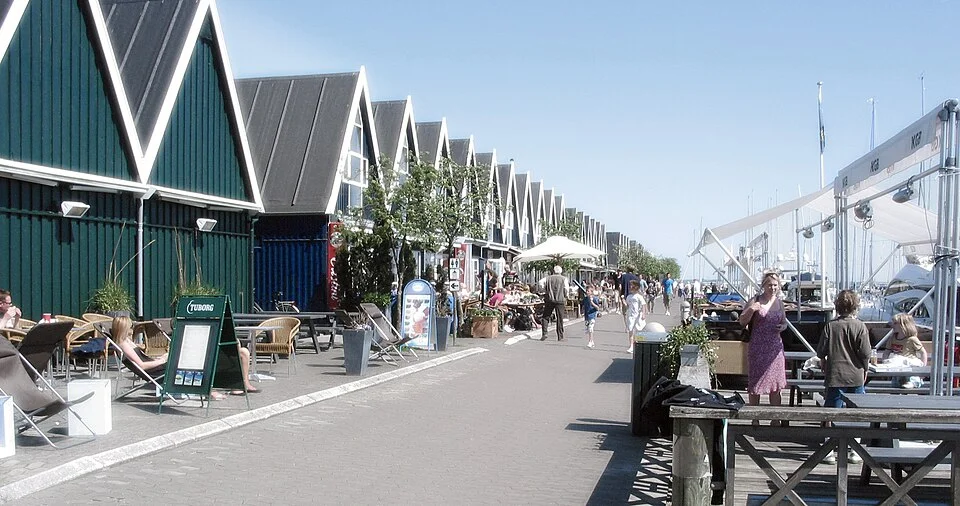
Photo: Helle Krog
North of Copenhagen, the waterfront loosens into beaches, bathing places, large houses and harbour entrances along Strandvejen, the coast road. Sweden remains across the Sound, while the Danish shore offers places to stop within an otherwise open coastal passage.
Rungsted combines a substantial marina with Karen Blixen’s home just across the road. Farther north, Louisiana brings modern art into a garden overlooking the water, and Helsingør gathers old streets and maritime history around Kronborg Castle. The coast’s interest extends well beyond its berths.
The cruising ground
An open shore leading to the narrows
Map: sol.blue · Coastline: GSHHG 2.3.7, LGPL 3 or later.
The Danish coast runs north from Tuborg past Hellerup, Skovshoved and Vedbæk to Rungsted, then through the Nivå and Humlebæk shore to Helsingør. Harbours interrupt a largely continuous coastline, with stretches of beach between the towns.
Tuborg to Rungsted is about 10 nm along the coast; Rungsted to Helsingør roughly another 11–12 nm. At Helsingør the Sound narrows to about 2 nm across to Helsingborg. North of the castle, the water opens toward Kattegat.
North of Copenhagen · Beaches and the coast road
The Strandvejen shore
Tuborg’s modern marina and waterfront development mark the southern end of this stretch. Beyond it, the shore becomes more residential: villas among trees, public beaches, bathing jetties and sailing clubs. Hellerup, Skovshoved and Vedbæk give the coastline a succession of familiar harbour names, while the broad water stays open to the Swedish side.
This is a beach coast rather than an archipelago. The interest lies along the shore and across the Sound: a line of masts, a wooded slope behind houses, small boats outside a sailing club and merchant ships farther out. Much of the landward connection follows Strandvejen, with the railway running inland.
Along suitable stretches, anchoring off the beach is a pleasant option in settled weather, outside bathing areas, harbour approaches and charted restrictions. The shelter is directional: a quiet spot with wind off the Danish land becomes exposed when an easterly or southeasterly sea develops across Øresund. That open aspect is the main difference from the enclosed island waters elsewhere in Scandinavia.
The Copenhagen guide’s Tuborg section covers the southern marina and city connections. Farther along this coast, Rungsted brings a fuller harbour stop together with a particularly rewarding visit ashore.
Midway along the coast · Harbour life
Rungsted: a marina with life around its edges
Rungsted is the substantial harbour stop between Copenhagen and Helsingør. Long rows of resident yachts sit behind the breakwaters, while restaurants, cafés and boat businesses give the shoreside walk plenty of activity. The marina is part of local life, with sailing clubs and people coming down to the waterfront even when they have no boat to visit.
Its scale is useful for a visiting crew wanting marina services in one place. The public beach beside the harbour gives the stay another direction, and the shops and tables around the quays keep an evening ashore close to the boat. Just across Strandvejen, the trees around Rungstedlund offer a strikingly different setting.
Across Strandvejen · Rungstedlund
Karen Blixen’s house and the birds’ garden
Rungstedlund is unusually close to the boat for a major cultural visit. Cross the coast road from the harbour and the marina gives way to a white house, garden and trees. This was Karen Blixen’s childhood home, and the place she returned to after her years in Kenya.
Readers may know her through Out of Africa, or under the pen name Isak Dinesen. After returning in 1931, she made Rungstedlund the centre of her writing life. The house brings those two worlds together: an old Danish family home with furnishings and objects carried back from Africa, and rooms shaped by a writer’s eye.
The Karen Blixen Museum preserves the domestic setting. In the living room, the fireplace, furniture and arranged objects give a sense of a house used for conversation as well as writing. Blixen recorded radio talks here, reaching a Danish audience as a storyteller in her own voice. The visit is intimate in scale, with the life of the author expressed through the rooms.
The grounds extend the visit beyond literature. Around the house lies a 15-hectare bird sanctuary, with woodland, meadow, an orchard and water. Blixen helped establish the foundation that would preserve Rungstedlund and its birds; she is buried in the grounds. Paths lead away from the coast road into a quieter landscape, close to the harbour but removed from its activity.
The sanctuary can be visited independently of the museum, making a garden and woodland walk a worthwhile reason to cross over even without going into the house. The local Rungstedlund guide describes the grounds; the museum publishes house access, exhibitions and café information.
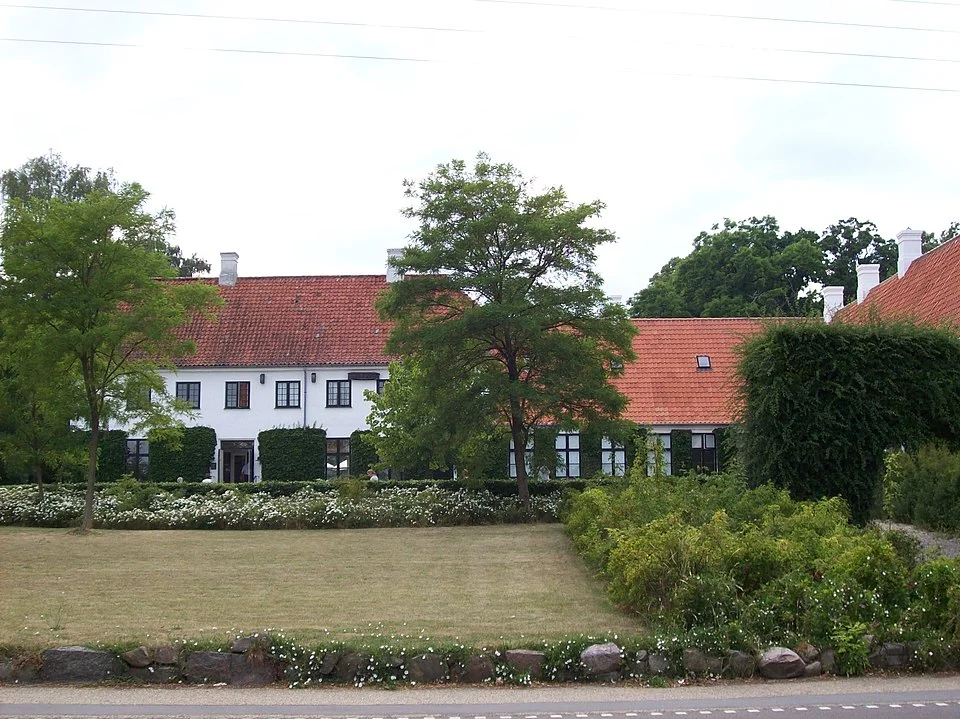
Photo: Niels Elgaard Larsen
Humlebæk · Art beside Øresund
Louisiana, with the Sound beyond the sculpture garden
At Humlebæk, north of Rungsted, Louisiana Museum of Modern Art gives the coast another substantial destination ashore. Galleries connect with a sculpture park overlooking Øresund. The relationship between art, buildings, trees and sea is part of the visit, alongside the changing exhibitions.
It works well as a shore excursion from a harbour elsewhere on the coast. The coastal railway serves Humlebæk, followed by a walk of about 10–15 minutes to the museum; bus 388 also follows this coastal corridor. Louisiana’s arrival information sets out the connections from Copenhagen and Helsingør.
The sculpture garden gives a reason to spend time outdoors between galleries, and the museum has a dedicated Children’s Wing. Art and a view across the same water the boat has been sailing make this a particularly natural outing from an Øresund berth.
The northern narrows · Helsingør and Kronborg
A castle at the Baltic’s doorway
Helsingør concentrates the geography of the Sound into one view. Sweden is close across the water, ferries cross to Helsingborg, and Kronborg stands on the point between the town and the open northern approach. From the sea, its towers and ramparts still make the strategic position immediately legible.
For centuries, ships passing through these narrows paid the Danish Sound Dues. Kronborg’s history is tied to that control of trade between the Baltic and the wider world. The Renaissance castle is also the Elsinore of Shakespeare’s Hamlet. Its rooms and fortifications offer two ways into the place: royal display inside, and the commanding view of the passage outside.
Beside the castle, M/S Maritime Museum of Denmark occupies an extraordinary setting below ground around a former shipyard dry dock. The old industrial structure remains open at its centre, with the museum wrapped around it. It connects the historic harbour with the wider lives and work of seafarers.
Helsingør’s town centre is close behind: old streets, shops and cafés within walking distance of the waterfront. The castle, former shipyard and town belong to one compact shore visit. North of Kronborg, the marina and beach bring the Sound back into view, with Kattegat opening beyond the narrows.
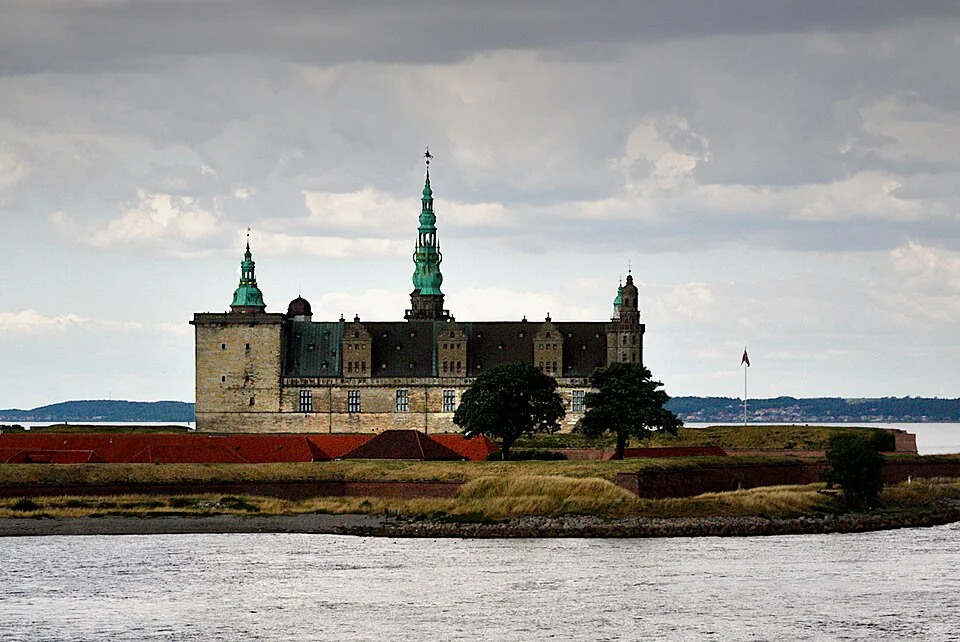
Photo: TEkman73
Neighbouring cruising grounds
The city and the southern approach
Copenhagen brings canals and city waterfronts to the southern end of this coast. Farther south, Møn and the approach to Øresund offer chalk cliffs, woodland and Klintholm’s small working harbour. North of Helsingør, Kattegat opens toward Anholt, Læsø and the Swedish coast. The Baltic & Skagerrak map shows the wider connections.
Map data and licence notices
Coastline extract from GSHHG 2.3.7 by Paul Wessel and Walter H. F. Smith: regional GeoJSON, dataset notice, LGPL and GPL. Map composition: sol.blue.