Without harbour stops
Canary Islands → Martinique
2 700–2 900 nm
A southerly arc before turning west. The length depends on where the wind is found.
Canary Islands → Martinique · optionally via Cape Verde
Across the Atlantic with the trade winds, and back to Europe under sail or by transport ship.
03 · All the way to the Caribbean
First the Canary Islands. Then a little south in search of a good belt of northeast trade winds, and onwards across the ocean towards Martinique. Day after day under sail, before green mountainsides and a new world of islands appear on the horizon.
How far south the route goes is determined by the weather. The lines show sailing ideas.
Coastline: Natural Earth · public domain. Map: Sophie · CC BY 4.0.Canary Islands → Martinique
14–16 days at sea?
At an average of 7 knots, 2,700–2,900 nautical miles gives approximately 16–17 days.
For a fast boat such as the Pogo 44, 14–16 days across the Atlantic could be a possible estimate in good trade-wind conditions. Over approximately 2,800 nautical miles, that corresponds to an average of 7.3–8.3 knots, around the clock.
The smaller Pogos have also demonstrated good offshore speed in practice. In Transquadra 2025, two Pogo 30s averaged 7.4–7.5 knots over their entire sailed tracks from Madeira to Martinique. And Pogo 36 Amarys finished third among the monohulls in ARC+ 2019, according to the owner’s account on the yard’s website.
Weather, route and the pace aboard determine how many days the crossing takes.
This is a winter idea. One possible departure is in late November or December, with time in the Caribbean afterwards. The official Atlantic hurricane season lasts until 30 November; the calendar does not replace a good weather window.
Explore the classic westbound crossing with ARC ↗Without harbour stops
2 700–2 900 nm
A southerly arc before turning west. The length depends on where the wind is found.
The optional island leg
approx. 850 nm
Farther south to São Vicente in Cape Verde, with a proper stay before the ocean leg.
From Cape Verde
2 100–2 200 nm
From here the route continues west. The whole journey via Mindelo is around 3,000 nm, plus the days on the islands.
A stop in Mindelo divides the journey in two and offers a stay in a new island group. The boat can be restocked before the next departure, with a few days ashore along the way. The alternative is to continue to Martinique in one stretch, without this stop. The 14–16-day estimate applies to the crossing from the Canary Islands without harbour stays en route.
The distances are rounded estimates, not measured sailing tracks. The shortest geographic connection from Las Palmas to Le Marin is about 2,650 nm; a southerly arc makes the crossing longer. From Mindelo to Le Marin it is about 2,080 nm before allowances for route choices.
In Transquadra’s results for Madeira–Martinique in February 2025, Pogo 30 La Mer est Ronde is listed with 2,833.9 nm in 15 days and 23 hours, and Juley with 2,930.0 nm in 16 days and 6 hours. The list gives averages of 7.4 and 7.5 knots respectively along the sailed tracks. These are actual elapsed times, without handicap adjustment. Speed directly towards the finish was lower because the boats sailed farther than the shortest connection.
For Pogo 36 Amarys, the owner reports third place among monohulls in ARC+ 2019, via Cape Verde to Saint Lucia. The account gives no average speed; it is an example of the boat’s result in an offshore passage.
For comparison, ARC lists 2,700 nm and 18–21 days for an average boat to the neighbouring island of Saint Lucia. ARC+ lists 850 nm from Las Palmas to Mindelo, but continues from there to Grenada. The 14–16 days are an estimate for the Pogo 44 in good conditions, without waiting days or harbour stops.
The season follows NOAA’s tropical cyclone overview. Sources checked on 18 September 2026.
After the months in the Caribbean
The boat can be sailed back when spring arrives, or carried on a transport ship. This allows a westbound crossing to be combined with a return to Europe without another long passage for the crew.
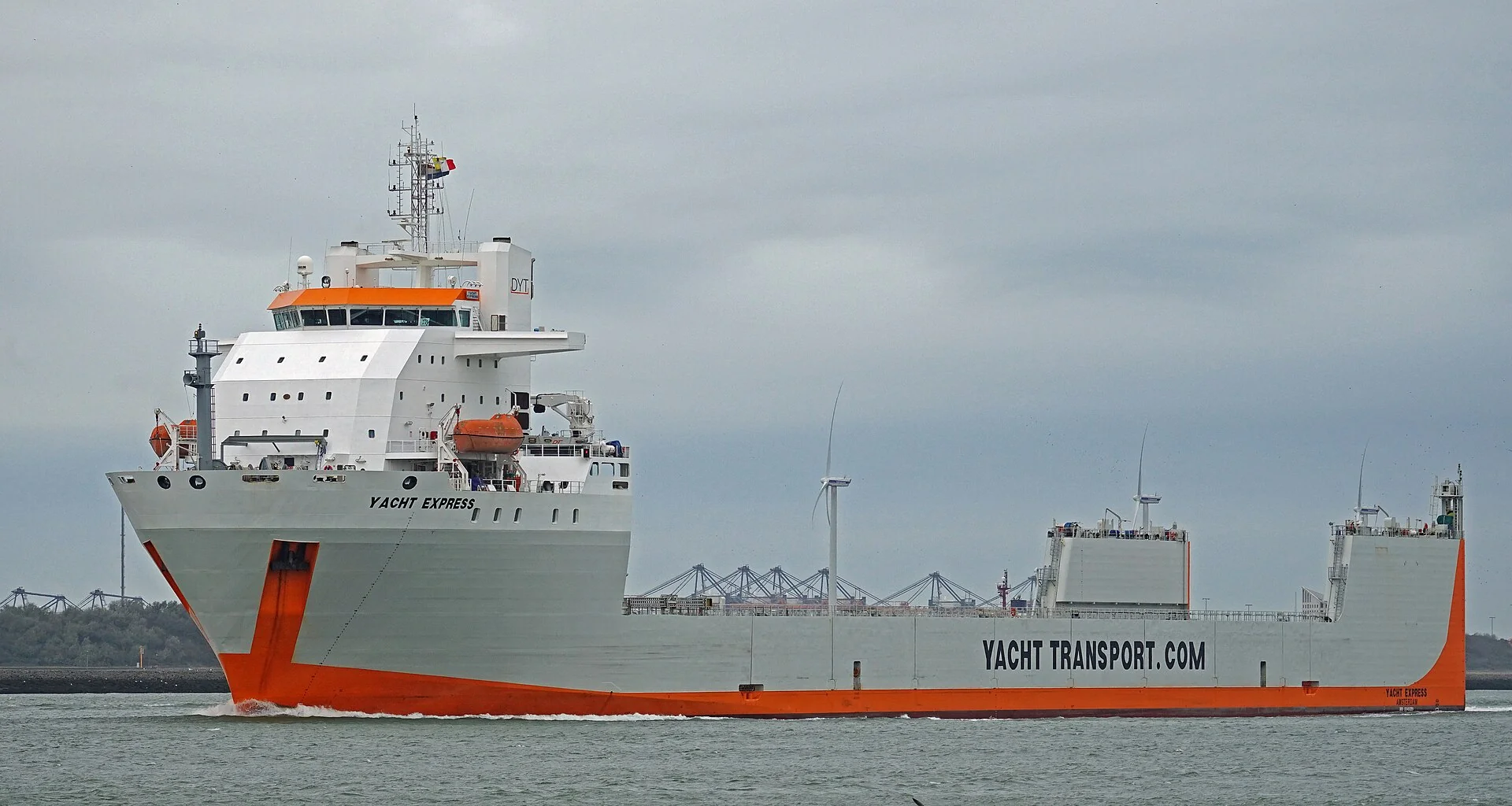
Transports cruising and racing boats between the Caribbean, northern Europe and the Mediterranean. The link leads to their guidance on shipping home after the ARC.
Offers transport with the mast up or down. Collection points include St. Thomas and Martinique.
Represents Sevenstar for customers in countries including Norway, Denmark and Sweden. A possible contact for transport, cradle, securing and handling from water to water.
Uses a different method: the ship lowers its loading deck, the boats float in and the deck is raised again. This is called float-on/float-off. They also have routes between the Caribbean and the Mediterranean.
If transport becomes relevant, a quotation can be requested for the particular boat, including ports, dates, preparation, insurance and price excluding VAT.